Printable Couples Conflict Workbook for Calm, Safe Talks

When conversations stop feeling safe, structure can bring you back
When disagreements turn into repeating loops—raised voices, shutdowns, or days of distance—having a shared process can change everything. A printable conflict-resolution workbook gives couples structured prompts and exercises to slow down, listen better, repair hurt feelings, and rebuild trust after arguments without needing perfect timing or perfect words. Instead of trying to “win” a conversation, you get a repeatable way to feel heard, lower intensity, and move toward teamwork.
Why arguments repeat (and why “talk it out” often fails)
Most conflict isn’t really about the surface topic (dishes, schedules, tone, money). It’s often about unmet needs, stress load, and the feeling that one person’s experience doesn’t matter. When that deeper layer isn’t named, couples keep revisiting the same fight—just with different details.
Common escalation patterns show up fast: criticism and defensiveness, pursuit and withdrawal, scorekeeping, and mind-reading assumptions. Once the nervous system is activated, problem-solving drops dramatically. The American Psychological Association notes that stress can intensify emotional reactions and strain relationships, making calm communication harder to access in the moment (APA: Stress).
A written format can help because it reduces interruptions and gives equal airtime—especially when one partner needs more time to process. Instead of arguing in circles, you’re both responding to the same set of prompts, in the same order, with the same goal: understanding first, solutions second.
What a couples conflict-resolution workbook should help you do
A practical workbook is more than a list of “communication tips.” It should guide you through the exact moments where couples usually get stuck:
- Name the real problem: identify the trigger, the meaning attached to it, and the need underneath it.
- Improve listening skills: reflect back what was heard before responding; confirm emotions without agreeing to every detail.
- Stay on one topic: use boundaries that prevent piling on old issues in the heat of the moment.
- Turn complaints into requests: convert “You never…” into specific, doable asks with timelines.
- Repair after the argument: apologize effectively, make amends, and set a small follow-up plan.
Common conflict moments and the worksheet tool that fits
| Conflict moment | What it usually sounds like | Workbook tool to use | Goal |
|---|---|---|---|
| Escalation | “You always do this.” | Pause + feelings/needs check-in | Lower intensity before solving |
| Shutdown | “Whatever. Fine.” | Time-out plan + return time | Prevent stonewalling and abandonment fears |
| Misunderstanding | “That’s not what I meant.” | Reflect-and-clarify prompts | Increase accuracy and empathy |
| Broken trust | “How do I know it won’t happen again?” | Repair plan + accountability steps | Create predictability and safety |
| Recurring topic | “We’ve talked about this a million times.” | Root-cause worksheet + experiment plan | Move from debate to testing solutions |
How to use a printable workbook without turning it into homework
The point isn’t to “do it perfectly.” The point is to make it easier to begin—and safer to continue—when emotions are high.
- Choose a calm window: schedule a 20–30 minute check-in rather than starting mid-conflict.
- Use a timer and turns: one partner speaks, the other mirrors; then switch roles.
- Keep the goal small: aim for understanding and one next step, not a full life overhaul in one session.
- Create a “restart phrase”: agree on words that mean “pause, reset, and use the page.”
- Print multiple copies: one for active conflicts, one for weekly relationship maintenance.
If you want a helpful framework for common negative patterns, the Gottman Method’s “Four Horsemen” and antidotes is a widely referenced starting point (Gottman: The Four Horsemen).
Key exercises that make the biggest difference
Couples often assume the “right solution” will fix the relationship. In reality, the biggest shift usually comes from how you talk while you’re finding solutions.
Using the workbook to rebuild trust after a rupture
If conflict includes intimidation, threats, coercion, or fear, a workbook isn’t the right tool for safety. The National Domestic Violence Hotline outlines warning signs and ways to get help (The Hotline: Warning Signs).
Who benefits most from a structured communication eBook
A ready-to-print option for guided conflict repair
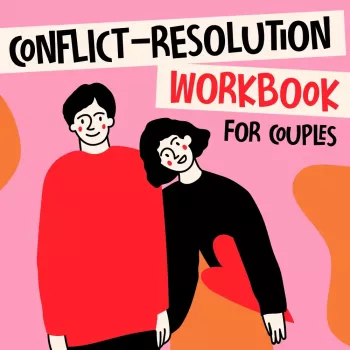
If you want a repeatable system you can use the next time tension rises, the Conflict-Resolution Workbook for Couples (printable communication eBook) is designed to strengthen listening, reduce argument spirals, and support trust repair with guided prompts and practice pages.
For many couples, conflict tools work best when the relationship also has positive rituals. Adding simple connection routines can make tough conversations feel less threatening over time. For family-focused connection ideas, the Stronger Together: Family Bonding Pack offers structured activities and checklists that support warmer day-to-day interactions.
And because stress often fuels reactivity, improving personal routines can indirectly improve conflict outcomes. The Ultimate Productivity Blueprint can help couples reduce overwhelm by clarifying priorities, time blocks, and daily reset habits—so fewer conversations begin at a 9/10.
FAQ
How long should a conflict-resolution session take?
Aim for 20–45 minutes with a timer and a planned stopping point. If emotions rise, pause and schedule a return time so the conversation ends with structure, not exhaustion.
What if one partner shuts down or refuses to talk?
Use a time-out agreement with a specific return time and consider written responses first to reduce pressure. Start with lower-stakes topics to rebuild safety and prove that talking won’t lead to escalation.
Can a workbook help rebuild trust after repeated arguments?
Yes—structure supports consistent repair by guiding clear apologies, specific commitments, and short progress check-ins. Over time, predictable follow-through can rebuild safety without turning accountability into blame.











Leave a comment