Critical Thinking eBook: Decision Frameworks + Brain Teasers

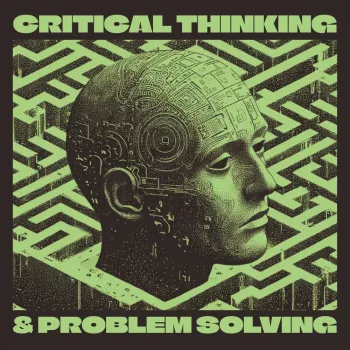
Critical Thinking & Problem Solving eBook (Digital Download): Smarter Decisions, Practical Frameworks, and Brain Teasers
This digital download eBook builds everyday reasoning skills through clear decision frameworks, common thinking traps to avoid, and brain teasers that strengthen logic under pressure. Use it for work choices, personal goals, conversations, and planning—anywhere better thinking saves time, money, and stress.
What this eBook helps improve
Good thinking isn’t about sounding smart—it’s about making fewer avoidable mistakes when the stakes are real. This guide focuses on practical skills that show up in daily life.
- Turning vague problems into clear, solvable questions
- Separating facts, assumptions, and opinions before acting
- Evaluating options with simple trade-offs instead of gut-only choices
- Spotting common reasoning errors (confirmation bias, sunk cost, availability bias)
- Practicing logic with brain teasers that train pattern recognition and attention
- Building repeatable habits: pause, clarify, test, decide, review
When you start labeling what you actually know versus what you’re assuming, decisions become calmer and faster—especially when pressure or emotion is high.
Who it’s for (and how it fits different routines)
The content is designed to slot into real schedules. It works whether you like short bursts of practice or a deeper weekly review.
- Students: studying smarter, strengthening arguments, and improving exam reasoning
- Professionals: prioritizing tasks, choosing projects, and communicating decisions clearly
- Parents and caregivers: navigating day-to-day choices, boundaries, and family routines
- Entrepreneurs and creators: testing ideas quickly and reducing costly missteps
- Puzzle lovers: using brain teasers as training, not just entertainment
- Busy schedules: short practice blocks (10–15 minutes) or deeper weekly sessions
Quick-start uses and typical time needed
| Goal | How to use the eBook | Time |
|---|---|---|
| Make a difficult choice | Define the decision, list constraints, compare 2–4 options, run a quick downside check | 15–25 minutes |
| Solve recurring problems | Identify root causes, test one small change, review results after a week | 20 minutes + review |
| Think more clearly under stress | Use a short pause routine + a simple question checklist before responding | 3–7 minutes |
| Build logic stamina | Complete a small set of brain teasers, then reflect on the strategy used | 10–15 minutes |
Decision-making frameworks you can reuse
Frameworks reduce mental load. Instead of reinventing the wheel each time, you run the same “decision circuit” and let it surface what matters.
- Clarify the objective: what “better” means (cost, time, risk, relationships, learning)
- Constraints first: what cannot change (budget, deadlines, values, policies)
- Option generation: create at least one alternative beyond the obvious two
- Second-order thinking: consider what happens after the first outcome
- Pre-mortem: imagine the decision failed—list likely causes and reduce them
- Post-decision review: capture what worked, what didn’t, and what to repeat
These steps also improve communication: when you can explain objectives, constraints, and trade-offs, discussions become less personal and more productive.
Brain teasers as skill training (not just puzzles)
Puzzles are valuable because they create a safe place to practice clarity and patience. The goal isn’t to “be fast,” but to be systematic.
- Use puzzles to practice staying systematic: write what’s known, unknown, and constraints
- Notice impulse answers: pause and test the first conclusion with a counterexample
- Track the method, not the score: pattern spotting, elimination, working backwards
- Increase difficulty gradually: accuracy first, then speed
- Apply the same steps to real problems: define, test, adjust, decide
Over time, this builds a “slow is smooth, smooth is fast” mindset: fewer rushed errors, fewer do-overs, and clearer next steps.
Common thinking traps and how to counter them
Cognitive biases are predictable shortcuts. Learning the names isn’t the finish line; building counters you’ll actually use is what makes the difference. For definitions and deeper context, see APA Dictionary of Psychology: confirmation bias, Britannica: cognitive bias, and the Stanford Encyclopedia of Philosophy: Bounded Rationality.
- Confirmation bias: actively search for disconfirming evidence and alternative explanations
- Sunk cost: decide based on future value, not past effort or money spent
- Availability bias: weigh base rates and data, not just memorable examples
- Overconfidence: assign ranges and probabilities instead of single-point certainty
- False dilemmas: expand the option set; look for hybrid or staged approaches
- Emotional reasoning: name the emotion, then verify the facts driving it
A quick upgrade that works almost everywhere: ask, “What evidence would change my mind?” If the answer is “nothing,” it’s not reasoning—it’s attachment.
A simple weekly practice plan
Consistency beats intensity. A few minutes per day builds habits that show up when you need them—during conflict, deadlines, or high-stakes choices.
Digital download details and what to expect
Recommended digital guides (in stock)
If you want a focused starting point, the core guide is available here: Critical Thinking & Problem Solving eBook – Digital Download Guide for Smarter Decision Making, Brain Teasers & Life Skills Ebook.
To turn clearer thinking into better follow-through, pair it with planning tools: The Ultimate Productivity Blueprint | Digital Productivity Guide for Goal Setting, Time Management & Daily Routines.
For households that want calmer communication and more intentional time together, add: Stronger Together: Family Bonding Pack | Digital Family Activities Guide for Kids & Parents | Printable At-Home & Outdoor Connection Activities | Family Time Checklist & eBook.
FAQ
Is this eBook suitable for beginners with no background in logic or philosophy?
Yes. It’s built for everyday decisions, with step-by-step frameworks, approachable examples, and brain teasers that progress from easier to more challenging so skills develop naturally.
How quickly can noticeable improvements show up in daily decision making?
Small gains in clarity often show up within the first week if you do short sessions and apply one framework to a real decision. Bigger improvements typically build over several weeks with weekly reviews and consistent real-life practice.
Can the exercises be used with teens or as a family activity?
Yes. You can adapt difficulty by choosing easier puzzles, using discussion prompts, and treating each exercise as collaborative reasoning practice rather than a test or competition.











Leave a comment