Portable 12V Digital Tire Inflator for Cars, Bikes
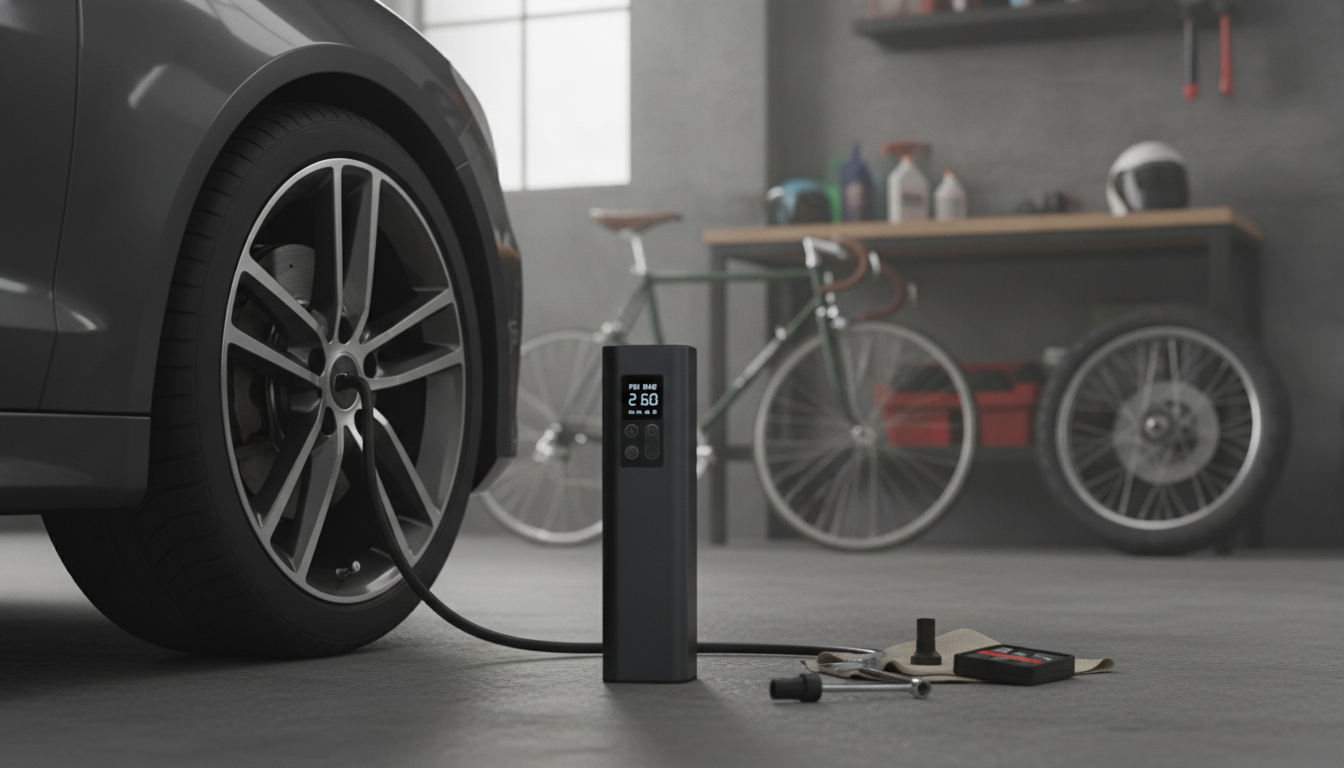
Portable 12V Digital Air Compressor for Car, Motorcycle & Bike Tires
Keeping tires at the right pressure improves handling, braking, tread life, and fuel economy. A portable 12V digital air compressor is a practical tool for topping off car tires at home, adjusting motorcycle pressure before a ride, and inflating bike tires without guessing. This guide covers what matters most—accuracy, speed, power options, and real-world use—so it’s easy to choose and use a compact inflator with confidence.
Why correct tire pressure matters on cars, motorcycles, and bikes
Stability and braking
Underinflation increases heat buildup and can make steering feel vague, while overinflation can shrink the contact patch and reduce grip. Both conditions can lengthen stopping distances and make emergency maneuvers less predictable.
Tread life and even wear
Incorrect pressure speeds up uneven wear patterns: low PSI often chews through the shoulders, and high PSI tends to wear the center faster. Keeping pressure where it belongs helps tires last longer and keeps traction more consistent over time.
Efficiency and comfort
Properly inflated car tires can support better fuel economy and a smoother ride. On bicycles, dialing in pressure improves rolling efficiency and ride feel—especially noticeable on longer rides or mixed surfaces.
Quick checks prevent “looks fine” surprises
Pressure naturally changes with temperature swings. A tire can look okay while being several PSI low, which is why quick top-offs are a smart habit before road trips, commutes, and weekend rides. For more tire safety guidance, see NHTSA Tire Safety.
What “portable 12V digital” means in everyday use
“Portable 12V digital” describes a compact electric inflator that typically plugs into a vehicle’s 12V outlet, shows pressure on a digital screen, and is built to store easily in a trunk or garage shelf.
- 12V power: Reliable runtime from your vehicle—no waiting for a battery recharge.
- Digital readout: Easier to hit a specific PSI target than “feel-based” inflation.
- Auto shut-off (when available): Helps avoid overshooting the target while you handle other tasks.
- Compact storage: Designed to be grabbed quickly for monthly checks or roadside top-offs.
Quick comparison: portable digital inflator vs. basic manual options
| Feature | Portable 12V Digital Air Compressor | Hand Pump / CO₂ |
|---|---|---|
| Pressure accuracy & readability | Digital display helps hit a precise target | Varies; often relies on feel or separate gauge |
| Speed for car tires | Typically faster and less tiring | Slow for car tires; CO₂ can be quick but limited |
| Best use cases | Car top-offs, motorcycle adjustments, occasional bike use | Bike emergencies, lightweight carry |
| Ongoing cost | Electric power; minimal consumables | CO₂ cartridges require replacement |
Key features to look for before buying
Pressure range that matches your tires
Confirm the compressor can reach typical car PSI and also handle higher-pressure bicycle tires when needed. A clear digital display matters most when you’re aiming for repeatable numbers (especially on motorcycles).
Airflow and real fill time
Faster compressors reduce waiting—helpful when you’re topping off multiple car tires or compensating for temperature drops. If you routinely maintain more than one vehicle, speed becomes a quality-of-life feature.
Hose and cord length
Reach determines how convenient the tool feels. A longer power cord and hose make it easier to inflate all four wheels without repositioning the vehicle or stretching the unit awkwardly.
Valve compatibility and included adapters
Cars and most motorcycles use Schrader valves. Many bicycles use Presta valves, which may require an adapter. If you also inflate sports balls or pool inflatables, look for a kit that includes the common nozzles.
Heat management and duty cycle
Small compressors work hard. Better ventilation and sensible pauses during multi-tire sessions help prevent overheating and extend the life of the motor.
Visibility for night or roadside use
A backlit display or built-in light is valuable when you’re checking pressure before an early commute or topping off on the shoulder after a slow leak alert.
How to use a portable digital air compressor (fast, consistent results)
Step 1: Find the recommended pressure
Cars: Use the driver door jamb placard. Motorcycles: Check the owner’s manual or any manufacturer sticker. Bikes: Use the tire sidewall range as a starting point and adjust for comfort, surface, and rider weight. For a clear walkthrough, Michelin’s guide is a helpful reference: How to Check Tire Pressure.
Step 2: Check “cold” tires when possible
Pressure rises as tires warm up from driving or riding. For the most consistent results, check before travel or after the vehicle has been parked for a few hours.
Step 3: Attach securely to the valve stem
Step 4: Set the target PSI and inflate
Step 5: Stop at target and cap the valve
Vehicle-specific tips: car vs. motorcycle vs. bicycle
Cars
Motorcycles
Bicycles
Accuracy check
Common mistakes and simple fixes
Recommended option for quick top-offs
For everyday maintenance and roadside readiness, the Portable 12V Digital Air Compressor for Car, Motorcycle & Bike Tires is a compact, vehicle-powered solution that makes it easy to hit repeatable PSI targets without guesswork.
Extra tools for staying organized
- The Ultimate Productivity Blueprint | Digital Productivity Guide for Goal Setting, Time Management & Daily Routines
- Stronger Together: Family Bonding Pack | Digital Family Activities Guide for Kids & Parents
FAQ
Can a 12V digital air compressor inflate bicycle tires?
Yes if the valve type is supported. Many bikes use Presta valves and may require an adapter. Inflate within the tire’s stated PSI range and use short bursts near the target to avoid overshooting.
Should tire pressure be checked when tires are cold or warm?
Cold is best for consistency. Pressure rises as tires warm up from driving or riding, so set pressure before travel or after the vehicle has been parked for a few hours.
How accurate are built-in digital pressure readings?
They’re often accurate enough for routine maintenance, but readings can vary by unit. For motorcycles and other sensitive setups, periodically compare to a quality standalone gauge and use the same gauge consistently.









Leave a comment