Printable Pet First-Aid Cheat Sheet: Emergency Steps
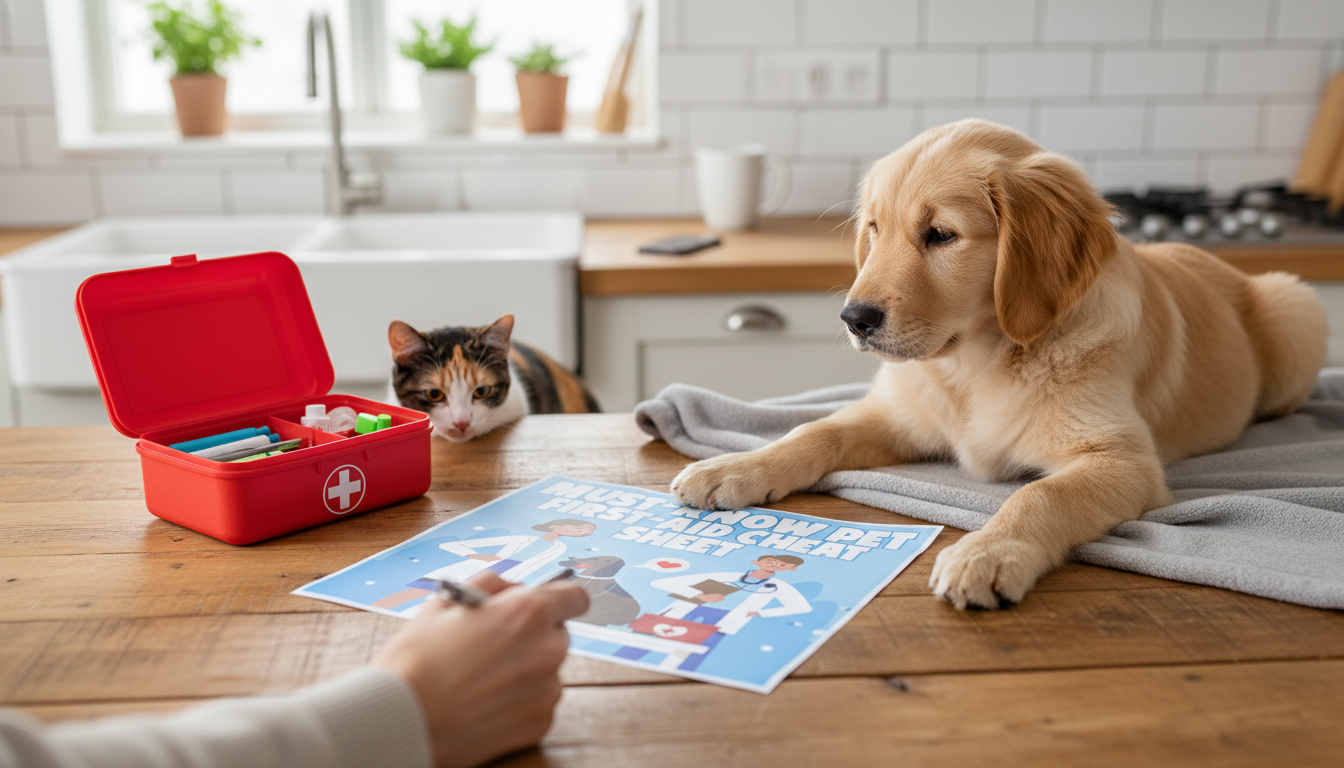
Emergencies can escalate fast, and a calm, step-by-step plan helps protect pets while getting professional care quickly. A printable cheat sheet paired with a stocked first-aid kit makes it easier to act on the essentials: stay safe, stabilize the pet, and contact a veterinarian or emergency clinic without delay.
What a Pet First-Aid Cheat Sheet Is (and What It Isn’t)
A pet first-aid cheat sheet is a quick-reference guide for the most common urgent scenarios—breathing trouble, bleeding, choking, suspected poisoning, heat/cold injury, and seizures. It’s built for speed: clear actions, what to avoid, and the “go now” signs that mean an ER vet visit is the safest next move.
It isn’t a substitute for veterinary diagnosis or treatment. Instead, it supports safe stabilization, reduces panic-driven mistakes, and helps a vet team get better information sooner.
For best results, use a cheat sheet alongside a first-aid kit and a saved list of critical phone numbers: primary vet, a 24/7 emergency clinic, and a pet poison resource.
Immediate Steps for Any Emergency
Most pet emergencies follow the same first priorities: protect yourself, prevent the situation from getting worse, and get professional guidance early.
- Secure the scene: Move away from hazards (traffic, broken glass, aggressive animals). Keep kids back and create space.
- Approach safely: Pain and fear can trigger biting. Use a leash, carrier, or towel wrap. Only consider an improvised muzzle if your pet can breathe normally and is not vomiting.
- Check the basics: Look at breathing, consciousness, gum color, and major bleeding.
- Call a veterinary professional early: Share symptoms, your pet’s weight/size and breed, known exposures, and what you already tried.
- Transport smart: Keep your pet warm and stable. If spinal injury is possible, use a flat surface (board/blanket) and minimize movement.
Quick check: what to look for and what to do next
| Check | What you might see | Action to take now |
|---|---|---|
| Breathing | Not breathing, noisy breathing, blue/pale gums | Seek emergency care immediately; follow vet guidance for rescue breathing/CPR if trained |
| Bleeding | Blood soaking a towel, pooling, spurting | Apply firm pressure with clean cloth; add layers; do not remove stuck material |
| Consciousness | Collapse, extreme weakness, unresponsive | Keep airway open, keep warm, go to emergency clinic now |
| Pain/trauma | Limping, crying, swelling, suspected fracture | Limit movement, support on a board/blanket, call ahead and transport |
| Possible poisoning | Drooling, vomiting, tremors, exposure to meds/chemicals/plants | Call vet/poison helpline immediately; do not induce vomiting unless instructed |
Bleeding, Wounds, and Bandaging Basics
Bleeding control is one of the most helpful skills you can use before reaching a clinic. Use steady, firm pressure with a clean cloth or gauze for 5–10 minutes without “peeking,” because lifting the cloth can restart bleeding.
- Add layers: If blood soaks through, add more material on top rather than removing the first layer.
- Wrap carefully: For limb wounds, a snug wrap can help, but avoid cutting off circulation. Check toes for swelling, coldness, or discoloration and loosen if needed.
- Leave embedded objects in place: Don’t pull out sticks, glass, or other material. Stabilize around the object and seek emergency care.
- Rinse minor debris: For superficial dirt, use clean water or saline. Avoid hydrogen peroxide or alcohol on deep wounds unless directed by a veterinarian.
- Go in urgently: Bites, deep punctures, gaping wounds, uncontrolled bleeding, or wounds near eyes/genitals should be evaluated quickly.
Choking and Breathing Trouble
If choking is suspected, keep your pet calm and avoid blindly sweeping the mouth; this can push an object farther back. Only attempt removal if the object is clearly visible and can be grasped easily.
Breathing distress can look different between dogs and cats. Watch for open-mouth breathing (especially in cats), an extended neck, belly heaving, wheezing/stridor, blue or gray gums, or collapse. Reduce stress and heat—keep the car quiet and cool—and call the emergency clinic while you’re on the way.
If you’re trained in rescue breathing/CPR, follow veterinary guidance. If you’re not trained or you’re unsure, prioritize rapid transport to emergency care.
Poisoning, Toxins, and Medication Mistakes
Authoritative guidance is available from the ASPCA Animal Poison Control Center and the American Veterinary Medical Association (AVMA).
Heatstroke, Hypothermia, and Temperature Emergencies
Seizures, Collapse, and Sudden Neurologic Events
For additional training resources, the American Red Cross Cat and Dog First Aid course options can be a helpful supplement.
Build a Simple Pet First-Aid Kit to Match the Cheat Sheet
How to Use and Store a Printable Emergency Guide
Printable Guides and Planning Tools (In Stock)
- Must-Know Pet First-Aid Cheat Sheet | Emergency Printable Guide for Pet Owners | Vet Tips
- The Ultimate Productivity Blueprint | Digital Productivity Guide for Goal Setting, Time Management & Daily Routines
- Stronger Together: Family Bonding Pack | Digital Family Activities Guide for Kids & Parents
FAQ
Should vomiting be induced if a pet eats something toxic?
No—call a veterinarian or pet poison resource first. Inducing vomiting isn’t safe for every toxin or every pet, and a professional needs the substance, amount, timing, and your pet’s weight to advise the safest next step.
What are signs that mean a pet needs an emergency vet right away?
Go immediately for trouble breathing, blue/pale gums, uncontrolled bleeding, collapse/unresponsiveness, suspected poisoning, a seizure lasting over 5 minutes, severe trauma, inability to urinate, a suddenly distended painful abdomen (bloat concern), repeated vomiting with weakness, or eye injuries.
What should be in a basic pet first-aid kit for home and car?
Include bandage materials (gauze, non-stick pads, cohesive wrap, tape), saline, gloves, blunt scissors, tweezers, a thermometer with lubricant, a blanket/towel, a muzzle or soft cloth, a flashlight, an instant cold pack, and a tick tool. Avoid human pain medications unless a veterinarian specifically instructs you to use them.










Leave a comment