Solo Travel Safety Checklist: Plan, Arrive, Explore
Solo travel safety is a system, not a mood
Solo travel can feel freeing and empowering, but it also means every decision—where to stay, how to get around, and what to share—rests on one person. Safety is less about fear and more about preparation: building simple routines that reduce risk, keep valuables secure, and make it easy to get help fast. The goal is a steady, repeatable approach you can run before departure, on arrival, and during day-to-day exploring—even when schedules change, your phone dies, or plans shift.
What “safe solo travel” actually looks like
- Predictability by default: a simple plan for transit, lodging access, and communication—even if plans change.
- Lower exposure: minimal flash valuables, no risky shortcuts, and routes that are well-lit and populated.
- Redundancy: backups for money, documents, power, and key contacts so one loss doesn’t cascade.
- Firm boundaries: polite exits, clear no’s, and minimal personal details shared with strangers.
- Awareness without obsession: quick check-ins and simple habits that don’t consume the trip.
Pre-trip security planning (the steps that prevent most problems)
- Verify entry requirements and advisories: note common scams, restricted areas, and emergency numbers for your destination. Start with the U.S. Department of State travel resources, then cross-check health guidance on CDC Travelers’ Health.
- Share a “just enough” itinerary: send a trusted contact your lodging addresses, flight/train details, and day-trip areas (not minute-by-minute plans).
- Create a lost-phone plan: write down key numbers, set account recovery methods, and confirm how you’ll access funds if your device is gone.
- Back up documents: photos/scans of passport/ID, visas, insurance, prescriptions—store in an encrypted folder and keep a printed copy separate from the originals.
- Money setup: two payment methods, a small emergency cash stash in a different location, and bank travel notices where needed.
- Health prep: required vaccines/meds, insurance details, and a plan for urgent care at the destination (know where to go, not just what to buy).
- Pack with security in mind: discreet day bag, a small lock, and a doorstop alarm if it helps you sleep—RFID can be nice, but good habits matter more.
A quick solo travel safety checklist (print or save)
Use this checklist to confirm essentials before departure and at each new stop. Treat it as a repeatable routine: arrival day, first full day, and any time lodging or cities change.
| Task | Why it matters | Done |
|---|---|---|
| Save emergency contacts (local emergency number, embassy/consulate, lodging front desk) | Cuts response time during urgent situations | □ |
| Store copies of passport/ID + insurance in two places (digital + paper) | Speeds replacement and claims | □ |
| Set up phone security (PIN, biometric, Find My/locator, SIM PIN, backups) | Protects accounts and helps recover the device | □ |
| Plan first-night route from airport/station to lodging | Avoids rushed decisions and risky transit choices | □ |
| Confirm lodging address and check-in method | Prevents being stranded without access | □ |
| Split cash/cards (primary wallet + hidden backup) | One loss doesn’t become a trip-ending problem | □ |
| Do a quick arrival scan (exits, front desk hours, neighborhood vibe) | Improves situational awareness early | □ |
| Schedule a check-in message with a trusted contact | Creates accountability and support | □ |
Arrival and lodging habits that keep risk low
- Arrive smart: land before late night when possible; if not, pre-book reputable transport and keep pickup details accessible offline.
- Choose safer lodging basics: solid locks, good lighting, and reviews that mention security. For self-check-in, confirm instructions and backups (code, lockbox, host number).
- Run a room routine: test door/locks, locate exits, and keep shoes/keys/phone in one consistent place so you can move quickly if needed.
- Practice privacy: don’t say your room number out loud; keep balcony doors locked; avoid posting live locations in real time.
- Trust the “pressure” signal: if someone pushes you toward a secluded spot, demands personal info, or rushes decisions, exit early and calmly.
Street smarts: moving around confidently and avoiding common traps
Protecting documents, money, and digital accounts
Connecting with people without compromising boundaries
When something goes wrong: a simple response plan
Digital download guide and checklist: a ready-to-use safety system
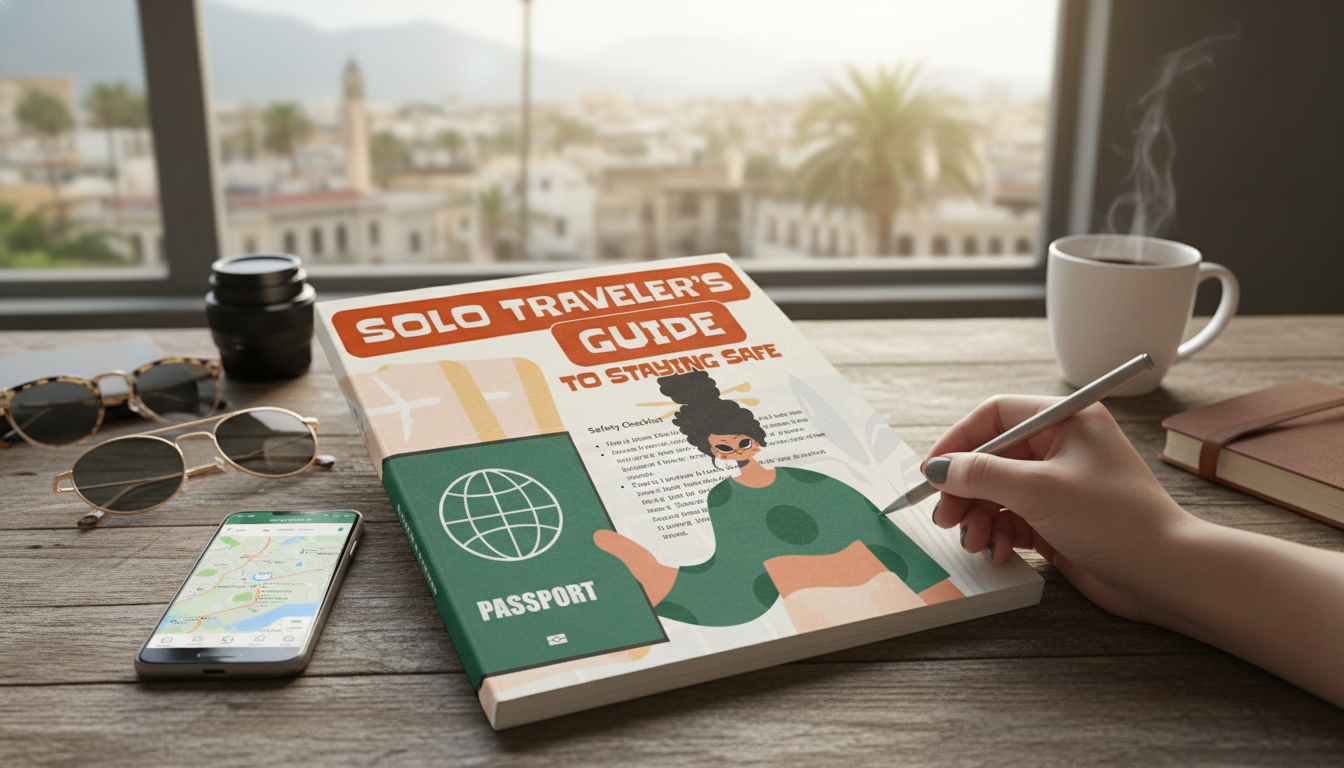
If a printable, repeatable routine helps you stay consistent across multiple cities, the Solo Traveler’s Guide to Staying Safe (Digital Download PDF) is built for quick reference during planning and on the move, with clear steps and a checklist format you can reuse each time you change locations.
For travelers who like structured routines overall (planning days, check-ins, and contingency steps), pairing your safety system with a simple planning framework can help—see The Ultimate Productivity Blueprint (Digital Guide) for day-to-day organization that supports calmer decision-making on the road.
If your solo trip is part of a bigger season of travel and family time, Stronger Together: Family Bonding Pack (Digital Guide + Checklist) is a handy companion for planning meaningful connection activities when you’re back home.
FAQ
What are the most important safety steps for a first solo trip?
Pre-plan your first night (arrival route and lodging access), share a basic itinerary with a trusted contact, and set up phone/account security before you leave. Then rely on repeatable routines like an arrival scan, scheduled check-ins, and carrying minimal valuables day-to-day.
Should a solo traveler carry a passport every day?
Rules vary by country and situation, so follow local requirements first. Often it’s safer to secure your passport in your lodging and carry a photocopy plus another accepted ID when allowed, while keeping the original accessible for official needs.
How can solo travelers avoid common scams without becoming paranoid?
Use short, firm responses, avoid rushed decisions, and keep personal details (especially lodging info) private. Stick to official transport and ticket sources, and step into staffed public places whenever something feels pressured or unclear.










Leave a comment