Memory Boost Worksheets: 15-Min Brain Training Plan
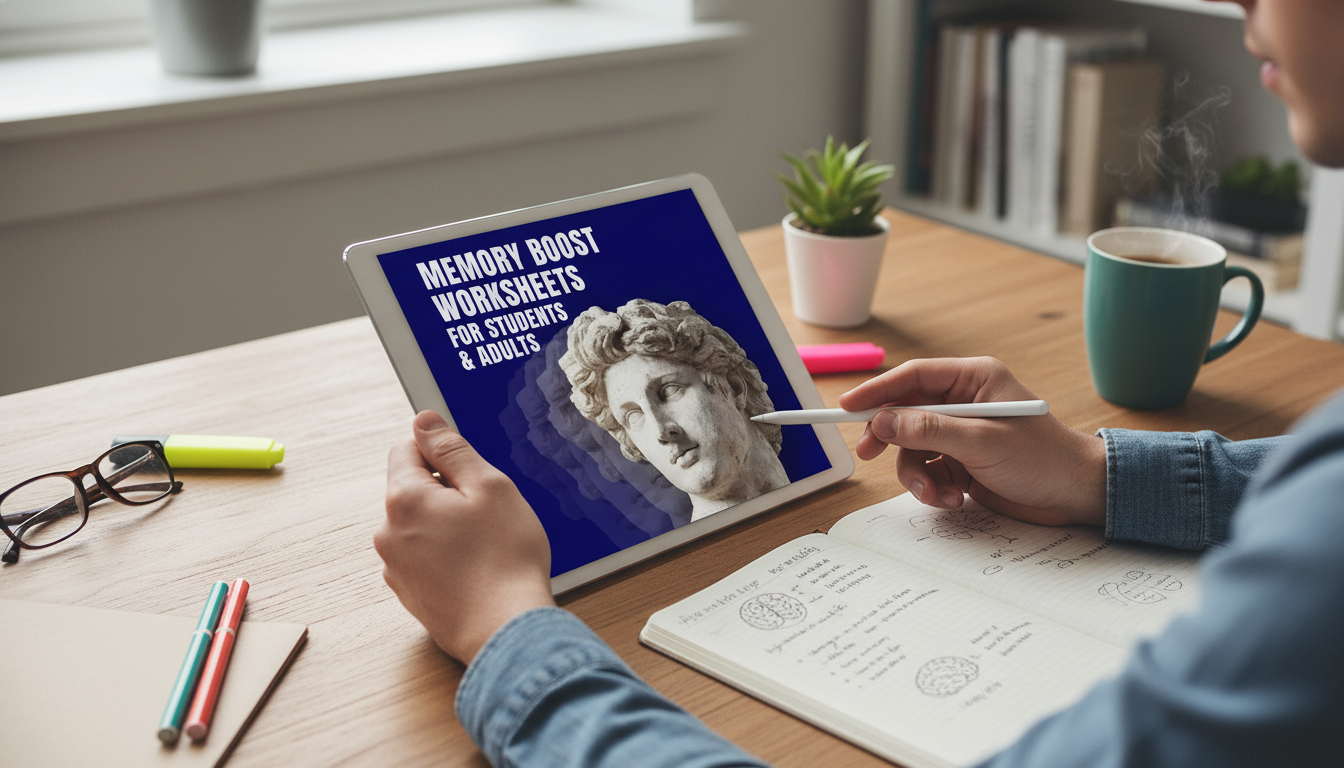
Memory Boost Worksheets for Students & Adults: Practical Brain Training for Study and Daily Recall
Memory improves fastest with short, repeatable practice that targets attention, encoding, and retrieval. The Memory Boost Worksheets for Students & Adults (Printable + Digital Download) are built for exactly that: guided drills, technique pages, and simple progress tracking that fit into real schedules. Students can turn study time into recall time, and adults can strengthen everyday “where did I put that?” and “what was their name?” moments without adding hours to the day.
What’s Included in the Worksheet Set
This set is designed to feel structured but not rigid—enough guidance to keep you moving, with flexibility to use your own material (notes, chapters, procedures, vocab lists, or meeting takeaways).
- Guided focus and memory drills to strengthen attention, working memory, and long-term recall through clear prompts.
- Technique pages that help convert information into memorable patterns using imagery, association, chunking, and retrieval cues.
- Study-friendly recall tools including self-quizzes, summary frameworks, and spaced review prompts to make “review” more effective than rereading.
- Progress pages to track accuracy, speed, and confidence across sessions—so improvement is visible and motivating.
For many learners, the biggest shift is moving from “I looked at it” to “I can pull it up on demand.” That’s the difference between familiarity and retrieval strength.
Who Benefits Most (Students, Adults, and Busy Schedules)
- Students: Supports vocabulary, formulas, dates, definitions, and lecture retention by practicing retrieval instead of rereading.
- College and exam prep: Builds a repeatable review system using spaced sessions and active recall prompts, which tends to hold up better under timed conditions.
- Adults: Strengthens name/face recall, remembering tasks, and keeping information accessible under stress (work, caregiving, or fast-changing schedules).
- Anyone rebuilding habits: Short sessions reduce friction and make consistency more likely than long “study marathons.”
If your biggest issue is time, pairing memory practice with a simple routine can protect your sessions. The Ultimate Productivity Blueprint can help carve out a dependable 10–15 minutes and keep it from getting crowded out by everything else.
A 15-Minute Routine That Fits Most Days
The fastest wins usually come from a small, repeatable loop: choose a target, encode it intentionally, test recall, then schedule the next review. Here’s a compact routine that works for both academic material and everyday information.
- Minute 1–3: Choose one target (chapter summary, meeting notes, language list) and define a single recall goal.
- Minute 4–10: Complete one worksheet drill focused on encoding (organization, chunking, or association) and immediate recall.
- Minute 11–14: Do a quick closed-book retrieval check and correct only after attempting recall.
- Minute 15: Log results and schedule the next review window to reinforce memory over time.
Weekly Memory Practice Plan (Quick Guide)
| Day | Focus | Time | Worksheet Prompt |
|---|---|---|---|
| Mon | Encoding | 15 min | Chunk + association |
| Tue | Retrieval | 15 min | Closed-book quiz |
| Wed | Spaced review | 10–15 min | Recall from cues |
| Thu | Interleaving | 15 min | Mix two topics |
| Fri | Reconstruction | 15 min | Mind-map from memory |
| Sat | Application | 15 min | Teach-back summary |
| Sun | Reset | 10 min | Review log + plan |
Memory Techniques Practiced in the Pages
These pages focus on techniques that reliably improve recall by strengthening the “path” back to information—especially when you’re under pressure.
- Active recall: Answer prompts without looking first to strengthen retrieval pathways. Research has shown retrieval practice can outperform more passive study methods for long-term learning (Karpicke & Blunt, 2011).
- Spaced repetition: Revisit information at expanding intervals to reduce forgetting and keep review efficient (Britannica overview).
- Chunking: Group details into meaningful units (ideal for numbers, steps, and lists).
- Dual coding: Pair words with simple visuals or symbols to improve encoding.
- Elaboration: Connect new facts to what you already know—why it matters, how it’s used, and real examples.
- Cue-based retrieval: Build triggers (headings, acronyms, key questions) that reliably pull information back when you need it.
Working memory is often the bottleneck when juggling multiple steps or distractions, so drills that reduce cognitive load and improve organization can make recall feel noticeably easier over time (APA Dictionary of Psychology).
Printable and Digital Use: Simple Setup Tips
- Printable: Keep a slim binder or folder and reuse frequently used pages with sheet protectors and dry-erase markers.
- Digital: Type directly into the file (or annotate) and store weekly sessions in dated folders for easy comparison.
- Make it frictionless: Pre-select 5–10 pages for a “starter week” so sessions begin instantly.
- Pair with real material: Plug in class notes, book chapters, training manuals, or work procedures rather than practicing with random lists.
- Consistency beats intensity: Short sessions done often tend to win over occasional long sessions.
Tracking Progress Without Overthinking It
Related Digital Tools That Pair Well
- Protect the practice window: A planning system helps ensure memory sessions happen even on chaotic days. Pairing worksheets with the Ultimate Productivity Blueprint can reduce mental clutter and keep the routine stable.
- Family or group consistency: Shared check-ins and light recall games can make practice easier to maintain. For a simple way to build supportive routines at home, consider the Stronger Together: Family Bonding Pack.
FAQ
How quickly can results show up with daily worksheet practice?
Many people notice recall feels easier within 1–2 weeks for the material they practice consistently. Longer-term gains come from keeping sessions short, doing active recall, and using spaced review instead of cramming.
Do these worksheets work for students with test anxiety or busy schedules?
Yes—structured 10–15 minute sessions reduce overwhelm and make it clearer what to do next. Retrieval practice plus simple tracking can also build confidence because progress becomes visible week to week.
Is it better to use the printable pages or the digital version?
Printable pages are great for distraction-free practice and quick reuse, while the digital version is ideal for portability and saving dated sessions. The best choice is the format that will be used most consistently.











Leave a comment