Budgeting Like a Pro: Zero-Based, Debt & Savings System

Budgeting Like a Pro: A Simple System for Zero-Based Budgets, Debt Payoff, and Savings Momentum
A budget works best when it turns money decisions into a repeatable routine: assign every dollar a job, automate priorities, and track just enough to stay consistent. The goal isn’t perfection—it’s a monthly workflow that stabilizes cash flow, lowers stress, and builds momentum for debt payoff and savings.
What “budgeting like a pro” looks like in real life
“Pro-level” budgeting isn’t about complicated spreadsheets. It’s about a system that stays usable when life gets busy.
- Clarity: income dates, bills, and true costs are visible in one place
- Control: every dollar is assigned before the month starts (or before each paycheck)
- Consistency: a weekly check-in prevents small leaks from becoming big surprises
- Progress: debt balances fall and savings grows on a schedule, not by accident
- Flexibility: categories can change without abandoning the plan
Start with the numbers that matter: net income and minimum commitments
The fastest way to make budgeting feel simpler is to start with the “non-negotiables,” then build the rest around them.
- List all take-home income sources and their pay dates (salary, side income, benefits).
- Write down minimum fixed obligations: rent/mortgage, utilities, insurance, minimum debt payments, subscriptions.
- Add “true expenses” that are predictable but irregular: car repairs, annual fees, gifts, medical, school costs.
- Choose a budgeting cadence that matches cash flow: monthly if stable, paycheck-based if income varies.
| Category | Examples | How to set the amount |
|---|---|---|
| Fixed bills | Rent, phone, internet, insurance | Use exact bill amounts and due dates |
| Daily spending | Groceries, fuel, dining out | Use a realistic average from the last 2–3 months |
| True expenses | Car maintenance, gifts, annual renewals | Divide annual cost by 12 and fund monthly |
| Debt plan | Credit cards, loans | Start with minimums, then add an extra payoff amount |
| Savings plan | Emergency fund, sinking funds | Automate a set amount per paycheck or month |
| Fun & personal | Entertainment, hobbies | Set a cap so it’s guilt-free |
Zero-based budgeting: give every dollar a job
Zero-based budgeting is a planning method where you decide what your money will do before it disappears into random spending.
- Set the goal: Income − Planned categories = 0 (every dollar assigned, not necessarily spent).
- Assign priorities in order: essentials → minimum debt → savings → variable spending → extra debt/savings.
- Include a small “buffer” line item to absorb minor fluctuations without derailing the plan.
- If income changes, rebalance categories immediately rather than waiting until month-end.
- Use a planner layout that keeps categories and totals visible at a glance.
Use 50/30/20 as a reality check (not a rule that shames you)
The 50/30/20 framework is helpful as a quick “is this roughly balanced?” check—especially when expenses creep up quietly.
- Needs (about 50%): housing, utilities, groceries, basic transportation, minimum debt payments
- Wants (about 30%): lifestyle spending, upgrades, subscriptions, travel
- Savings & debt payoff (about 20%): emergency fund, retirement, extra principal payments
- Adjust when life demands it: high-cost areas or aggressive debt payoff may skew the ratios.
- Re-run the split after any big change: move, new job, childcare, medical costs.
Pay-yourself-first: the fastest way to make saving automatic
If saving depends on leftover money, it usually gets “outcompeted” by spending. Paying yourself first flips that script.
- Automate transfers to savings right after payday (before discretionary spending starts).
- Start small if needed: consistency beats a perfect number.
- Separate savings “buckets”: emergency fund, irregular bills, goals (vacation, tuition, car).
- Protect the emergency fund with clear rules for what counts as an emergency.
- Increase the savings amount after each raise, bonus, or debt payoff milestone.
Debt payoff plan: pick a method and track one metric
Debt payoff works better when it’s simple enough to follow on a stressful week. Choose a strategy and measure progress one way.
For practical consumer guidance on getting out of debt, the Federal Trade Commission’s debt resources can help you understand common repayment options and pitfalls.
A simple monthly workflow (setup day + 10-minute weekly check-ins)
If you want a straightforward primer on building and adjusting a budget, the Consumer Financial Protection Bureau (CFPB) has clear, consumer-friendly budgeting resources.
Tools that make it easier: using a planner-style system
Recommended digital tools to stay consistent
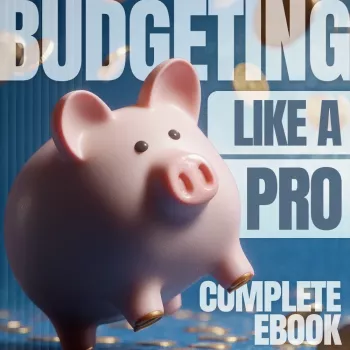
- Budgeting Like a Pro: Complete eBook – Personal Finance Planner (zero-based budgeting, 50/30/20 check, pay-yourself-first automation, debt payoff planning, and monthly reviews in one system).
- The Ultimate Productivity Blueprint (useful for building the weekly check-in habit, creating routines, and protecting time for setup day).
Common budgeting mistakes that quietly wreck progress (and quick fixes)
For foundational financial education modules (including budgeting), the FDIC Money Smart program is a solid reference.
FAQ
What is zero-based budgeting in plain terms?
It’s a method where you assign every dollar of planned income to a specific category—bills, groceries, sinking funds, savings, and extra debt payments—so your income minus your planned allocations equals zero. It doesn’t mean spending everything; it means deciding where it goes on purpose.
Should savings come before debt payoff?
Often, a small starter emergency fund comes first so unexpected costs don’t push you into more debt. After that, keep saving something while focusing extra payments on high-interest debt to balance stability with speed.
How do the 50/30/20 and pay-yourself-first methods work together?
Use 50/30/20 as a quick ratio check, then make the “20” easier by automating savings right after payday. The automatic transfer supports your savings goal while simplifying day-to-day spending decisions.











Leave a comment