4-Week Fit-at-Home Plan: Minimal Gear Workouts + Stretches
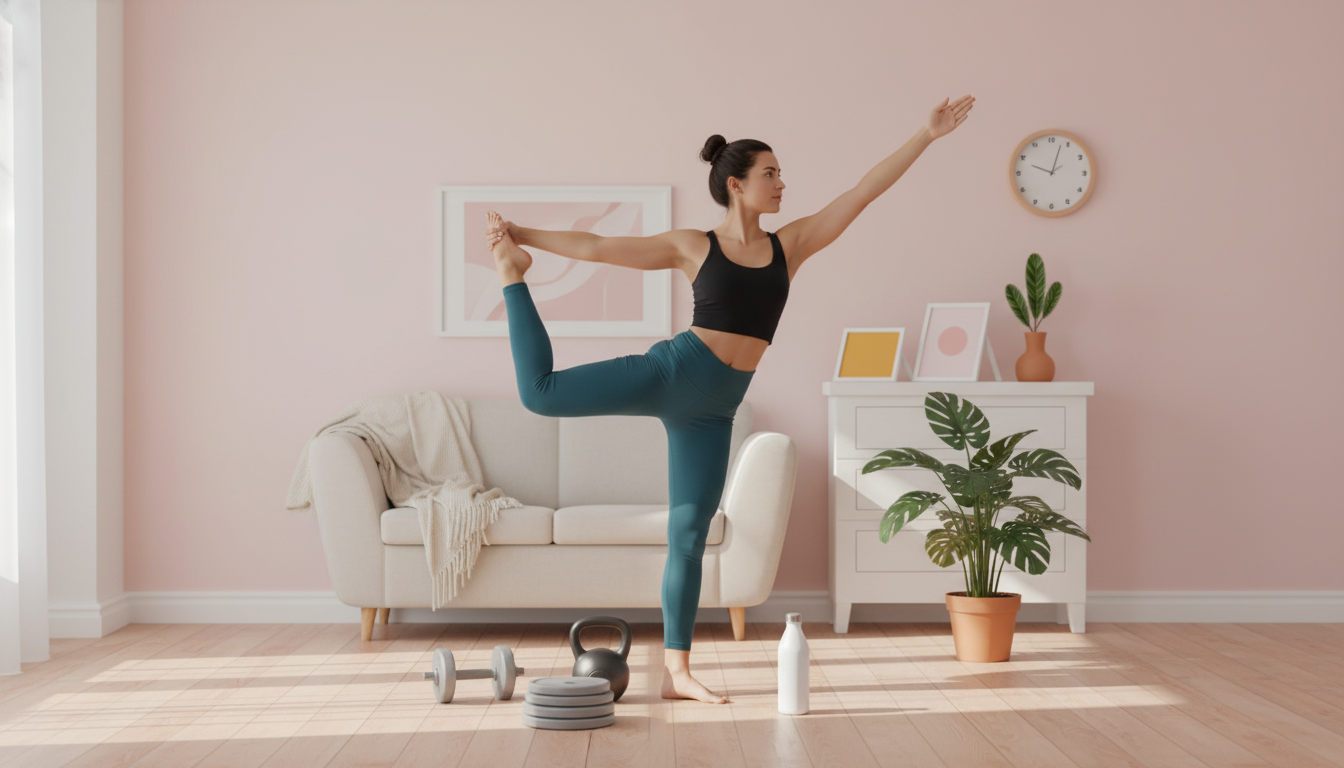
Fit at Home: A 4-Week Workout Plan with Minimal Equipment (Daily Workouts + Stretches)
A simple 4-week schedule can make home training feel automatic: show up, follow the day’s plan, and track progress without guessing. This guide lays out what to do each day, what equipment helps (but isn’t required), how to scale intensity, and how to stay consistent with short warm-ups and cooldown stretches.
What this 4-week plan is designed to improve
- Full-body strength using bodyweight patterns (squat, hinge, push, pull, carry/core)
- Cardio capacity with short, repeatable intervals that fit small spaces
- Mobility and recovery through daily, time-efficient stretching
- Consistency through a predictable weekly rhythm and simple progression
For general health, national guidelines recommend regular aerobic activity plus muscle-strengthening work multiple days per week. If you’re new or returning, a structured plan helps you build that habit safely. Helpful references include the Physical Activity Guidelines for Americans and the American College of Sports Medicine overview on resistance training.
Minimal equipment setup (and easy substitutes)
You can complete this plan with almost no gear. The goal is to keep your setup friction-free so you’re more likely to train on busy days.
- No-equipment options: floor space, a sturdy chair/bench, a towel, and a wall
- Helpful add-ons: resistance band set, light-to-moderate dumbbells, a yoga mat
- Substitutes: backpack loaded with books (rows/squats), towels for sliders, water jugs for weights
- Safety basics: stable surfaces, clear space, and controlled reps over speed
Equipment options and what they’re best for
| Equipment | Best uses | Substitute if you don’t have it |
|---|---|---|
| Resistance bands | Rows, pull-aparts, glute work, assisted push-ups | Towel isometrics, backpack rows (bent-over) |
| Dumbbells | Presses, rows, squats, hinges, carries | Backpack, water jugs, heavy books |
| Chair/bench | Step-ups, incline push-ups, triceps dips (if shoulders tolerate) | Stairs, sturdy couch edge (for incline push-ups) |
| Mat | Comfort for core and stretching | Carpet or folded blanket |
How the weekly schedule works (repeat for 4 weeks)
- Training days: 5 days per week (3 strength-focused, 1 conditioning-focused, 1 full-body circuit)
- Recovery: 2 lighter days with mobility + optional gentle cardio (walk, easy bike, light jog)
- Time targets: 20–40 minutes per session including warm-up and cooldown
- Progression: increase reps, sets, or resistance each week while keeping good form
Weekly plan at a glance (repeat for Weeks 1–4)
| Day | Focus | Session length | Notes |
|---|---|---|---|
| Day 1 | Lower body + core | 30–40 min | Squat/hinge emphasis; finish with short stretch |
| Day 2 | Upper body + posture | 25–35 min | Push/pull balance; include back-friendly work |
| Day 3 | Mobility + easy cardio (optional) | 15–30 min | Low intensity; aim to feel better after |
| Day 4 | Conditioning intervals + core | 20–30 min | Short bursts; scale with work/rest ratios |
| Day 5 | Full-body circuit | 25–40 min | Moderate pace; focus on steady effort |
| Day 6 | Mobility + walk | 15–45 min | Active recovery; include hips/ankles/upper back |
| Day 7 | Rest or gentle stretch | 10–20 min | Full rest is allowed; prioritize sleep |
Daily structure: warm-up, main workout, cooldown stretches
Each session follows the same simple flow, so you spend less time planning and more time moving.
- Warm-up (5–7 min): joint circles, marching/high knees, hip hinges, bodyweight squats, scapular push-ups
- Main work (15–25 min): pick 4–6 movements and follow sets/reps or timed intervals
- Cooldown (5–10 min): slow breathing + stretches for hips, hamstrings, chest, and upper back
- Rule of thumb: stop 1–2 reps before form breaks; quality beats quantity
For stretching form and safety basics, the Mayo Clinic stretching guide is a solid reference for gentle holds and consistent breathing.
Progression across 4 weeks (simple and measurable)
- Week 1: learn the movements; choose an easy-to-moderate effort and consistent pacing
- Week 2: add 1–2 reps per set or one extra round in circuits
- Week 3: increase resistance slightly (band tension/weight) or shorten rest by 10–15 seconds
- Week 4: keep form strict and push effort on the final set/round; deload afterward if continuing
- Tracking ideas: write down reps/weights, total rounds, and how hard it felt (1–10 scale)
A quick way to “earn” progression without adding impact: slow the lowering phase to 3 seconds, pause 1 second at the bottom, then stand/press smoothly. That tempo increase often makes bodyweight moves feel brand new.
Scaling for beginners, busy schedules, and limited space
Using a printable guide to stay consistent
Recommended digital guides (in stock)
- Fit at Home: 4-Week Workout Plan (Minimal Equipment PDF) — a structured day-by-day plan with workouts and stretches you can follow from your phone or print.
- The Ultimate Productivity Blueprint — helpful for building a consistent routine around training, sleep, and weekly planning.
- Stronger Together: Family Bonding Pack — a practical option if you want easy, screen-light activities that make active time feel more social.
FAQ
How long are the daily workouts in a 4-week home plan?
Most sessions fit into 20–40 minutes total: about 5–7 minutes to warm up, 15–25 minutes for the main workout, and 5–10 minutes to cool down. On busy days, a 12-minute circuit plus a short stretch still counts.
Can a minimal-equipment plan build muscle at home?
Yes, as long as you progressively increase the challenge over time using more reps, more sets, slower tempo, unilateral moves (single-leg/single-arm), or added load from bands and a backpack. Muscle gain will be gradual, but consistency and progression make a noticeable difference.
What stretches should be done after home workouts?
A brief cooldown can cover hip flexors, hamstrings, calves, chest/shoulders, and the upper back with gentle 20–40 second holds. Breathe slowly, avoid pain, and focus on relaxing the muscles rather than forcing range of motion.











Leave a comment