4-Week Puppy Training Plan: Potty, Cues & Calm Socializing
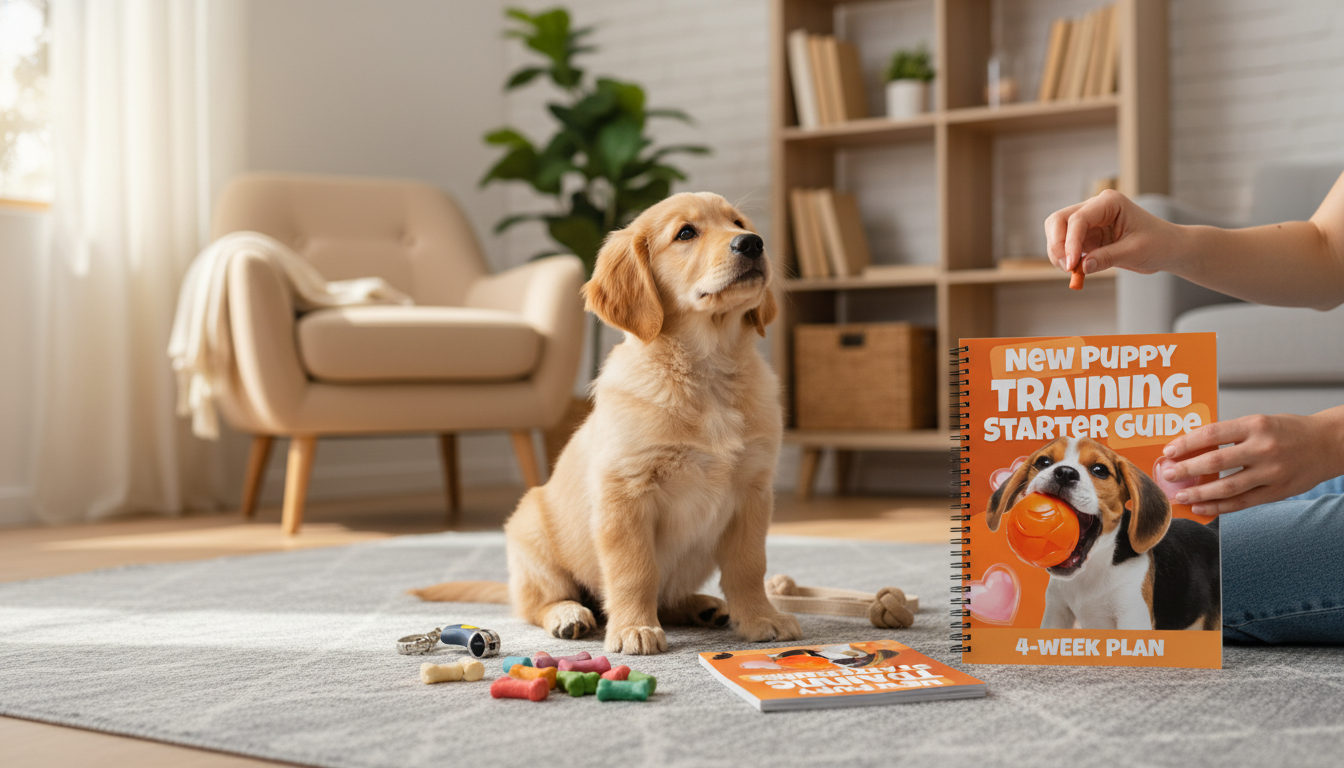
New Puppy Training Starter Guide: A 4-Week Routine for House Training, Commands, and Social Skills
A new puppy learns fastest with simple routines, short sessions, and clear rules that everyone follows. The four weeks below focus on the basics that make daily life easier: fewer accidents, calm handling, dependable starter cues, and confident (not chaotic) social experiences.
Before Training Starts: Set Up the Home for Success
Training goes smoother when the environment prevents “practice” of the habits you don’t want. Aim for easy supervision, fast potty access, and plenty of legal chew options.
- Choose a confinement plan: crate, exercise pen, baby gates, or a mix. The goal is supervision and preventing rehearsals of accidents and chewing.
- Pick a potty area and consistent route: same door, same patch of grass (or same potty station) to speed learning.
- Gather essentials: enzymatic cleaner, leash/harness, tiny soft treats, chews, a food puzzle, and an optional clicker.
- Decide house rules now: furniture access, bedrooms, where meals happen, and how greetings work—so no one sends mixed messages.
- Schedule a vet check: confirm vaccines and get guidance for safe socialization locations.
Starter Setup Checklist (Quick Reference)
| Category | What to prepare | Why it matters |
|---|---|---|
| Potty training | Enzymatic cleaner, potty log, consistent outdoor spot | Removes odor cues and helps spot patterns |
| Management | Crate or pen, baby gates, tether leash | Prevents accidents and chewing practice |
| Training rewards | Tiny treats, kibble portion, reward marker word/clicker | Improves timing and motivation |
| Comfort | Chews, safe toys, bedding (if appropriate), water access | Reduces stress and nipping/chewing |
| Handling | Brush, nail file/clippers, towel, high-value treats | Builds tolerance for grooming and exams |
Training Foundations: Timing, Rewards, and Session Structure
- Mark the instant you get the behavior: say “Yes” (or click) at the exact moment, then deliver the treat within 1–2 seconds.
- Keep sessions tiny: 1–3 minutes, multiple times daily. Quit while your puppy still wants more.
- Prevent mistakes: reward what you want far more than you correct what you don’t, using gates/pen/crate to manage.
- One cue per behavior: avoid repeating the cue; instead, make the task easier so your puppy can succeed, then reward.
- Schedule calm time: a mat settle, chew break, or quiet crate time prevents overtired “land shark” moments.
Week 1: Home Base, Potty Patterns, and Name Recognition
- House-training rhythm: go out immediately after waking, after eating/drinking, after play, and every 30–60 minutes when active.
- Reward outdoors: mark and treat the moment your puppy finishes. Then allow a short “bonus sniff” as an extra reward.
- Crate/pen introduction: feed meals in/near the crate and build duration gradually. Never use the crate as punishment.
- Starter cues: name game (name → eye contact → treat), “Come” indoors (tiny distances), and “Sit” using a lure.
- Handling practice: touch-and-treat for ears, paws, collar/harness, gentle restraint for 1–2 seconds, then release.
Week 2: Bite Inhibition, Loose Leash Basics, and Reliable Potty Habits
- Mouthing plan: redirect to a chew, reinforce gentle mouth, and end play for 10–20 seconds if teeth keep landing on skin.
- Add “Drop it”: trade with a treat, mark the release, then (when safe) give back an appropriate item to build trust.
- Leash skills indoors: reward your puppy for staying near you; keep it slow and low-distraction before going “real world.”
- Space potty trips carefully: stretch time between trips only after consistent success—young puppies still need frequent breaks.
- Start “Place/Mat”: reward stepping onto a mat, then reward sitting/lying down, building calm as a daily habit.
Week 3: Confidence Building, Polite Greetings, and Distraction Proofing
- Socialization goal: many positive, controlled exposures—not forced interactions. Pair new sights/sounds with treats.
- Polite greetings: teach “Sit” for petting. If your puppy jumps, attention pauses and resumes when paws are on the floor.
- Add “Down” and “Stay” foundations: build in tiny increments (1–3 seconds) and pay often.
- Outdoor recall games: practice in secure areas or on a long line. Make coming to you a party, then release back to exploring.
- Alone-time practice: short, calm sessions (minutes, not hours) help reduce separation stress over time.
Week 4: Real-Life Reliability—House Training in New Rooms and Simple Manners in Public
Socialization Without Overwhelm: A Safe Checklist
For more on why early, safe social experiences matter, see the AVSAB position statement on puppy socialization and the AKC puppy training basics.
Common Setbacks and Simple Fixes
Printable Plan Option: Keeping Everyone Consistent
- New Puppy Training Starter Guide (printable 4-week routine) for a week-by-week structure, tracking sheets, and quick daily exercises.
- The Ultimate Productivity Blueprint | Digital Productivity Guide for Goal Setting, Time Management & Daily Routines if you want a simple way to keep puppy sessions and household responsibilities on the same schedule.
- Stronger Together: Family Bonding Pack to help families coordinate routines and calm, positive daily interactions while the puppy is learning house rules.
FAQ
How often should a new puppy go out for potty breaks?
Plan on immediately after waking, after meals/drinks, and after play, plus every 30–60 minutes when your puppy is active. As accidents decrease, gradually extend the time between trips; many young puppies also need at least one nighttime potty break at first.
What are the first commands a puppy should learn?
Start with name recognition, come, and sit, then add down, leave it, drop it, and a mat/place settle for calm behavior. Keep sessions short and reward-heavy so the cues stay fun and reliable.
When can a puppy start socialization and walks outside?
Socialization can start right away in low-risk ways, but outside walks should match your veterinarian’s guidance on vaccinations. Use clean, low-traffic areas, carry your puppy when needed, avoid dog parks, and focus on positive, controlled exposures.









Leave a comment