Gentle Parenting Scripts: Empathic Communication Guide
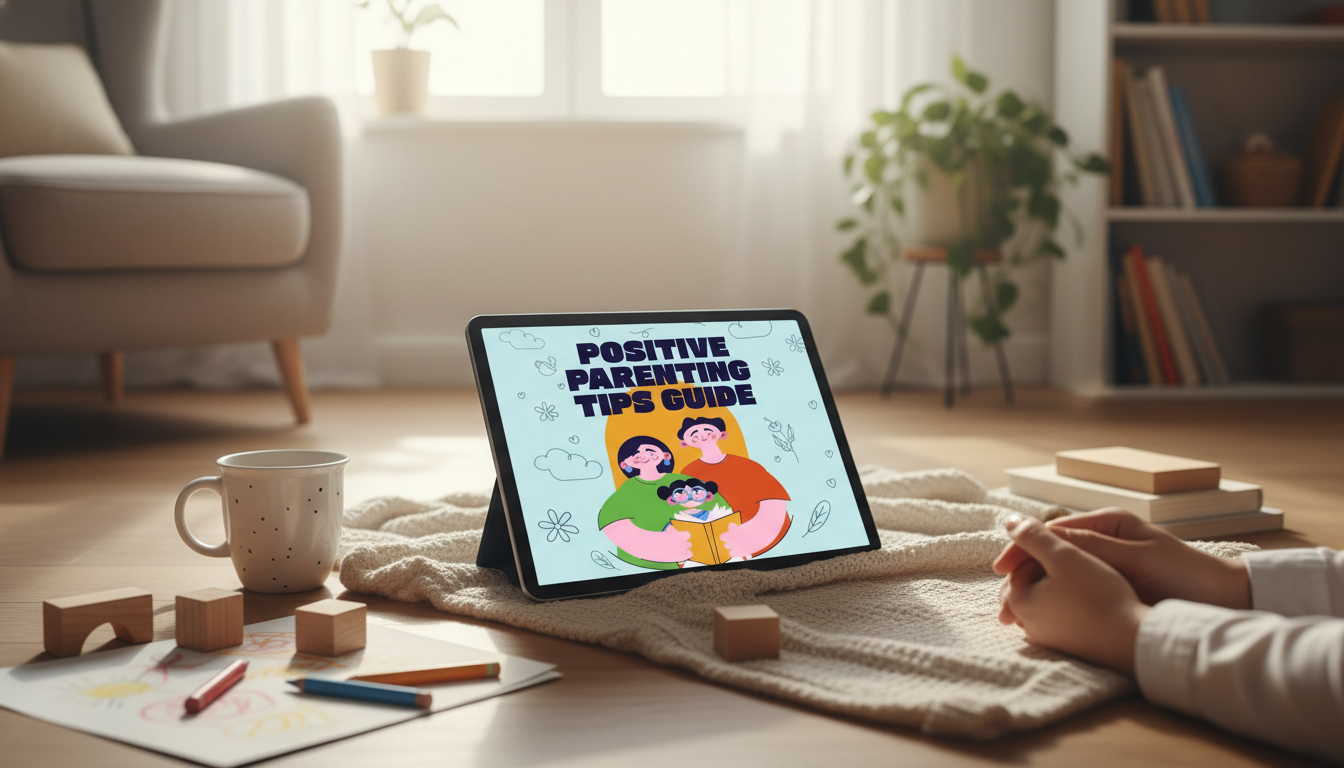
Positive Parenting Tips Guide: Gentle Parenting with Empathic Communication (Digital Download)
Gentle parenting works best when daily tools are simple, repeatable, and realistic in busy homes. This digital guide focuses on empathic communication—what to say, how to listen, and how to hold boundaries without threats, shame, or power struggles—so parents can respond with calm confidence during tantrums, sibling conflict, and everyday transitions. If supportive structure is the goal (not “perfect” parenting), gentle parenting offers a steady middle path: warm connection paired with clear limits.
For additional, research-informed support, many families also benefit from the practical communication and discipline guidance shared by the American Academy of Pediatrics and the everyday routines and behavior tools from the CDC Essentials for Parenting.
What Gentle Parenting Looks Like on a Normal Day
Gentle parenting isn’t a vibe—it’s a set of micro-habits that reduce power struggles and help kids learn emotional skills. On an ordinary weekday, it often looks like:
- Connection before correction: a brief emotional check-in before problem-solving (“You’re upset—tell me what’s going on.”).
- Clear boundaries without harshness: limits stated calmly, followed by consistent follow-through.
- Co-regulation: helping a child borrow adult calm before expecting self-control.
- Repair after rupture: quick reconnection after yelling or conflict to rebuild safety.
- Skill-building lens: treating misbehavior as a lagging skill, not a character flaw.
Empathic Communication: The Core Skills
Empathic communication is the engine of gentle parenting. It helps children feel understood while still learning that boundaries hold. The most effective skills are simple and short:
- Reflect feelings: name what is seen (“You’re disappointed”) without judgment or sarcasm.
- Validate without giving in: acknowledge the feeling while keeping the limit (“It’s hard. And it’s still no.”).
- Ask before advising: short questions that invite cooperation (“What would help right now?”).
- Use fewer words: one calm sentence beats a long lecture in heated moments.
- Nonverbal warmth: soft eyes, lowered voice, and a grounded posture reduce escalation.
When emotions are high, children process less language. A calm tone and a clear next step often do more than a detailed explanation.
Scripts for Common Hot Spots (Use, Then Personalize)
Scripts aren’t meant to sound robotic—they’re training wheels for staying steady. Try them as written first, then adapt to your child’s age and personality:
- Tantrums: “You wanted more time. It’s hard to stop. I’m here. When your body is ready, we’ll go.”
- Hitting: “I won’t let you hit. Hands stay safe. You can stomp or squeeze a pillow.”
- Defiance: “You’re saying no. The job still needs to get done. Two choices: A or B.”
- Sibling conflict: “Both of you want it. I’ll help. First, bodies apart. Then turns/solution.”
- Bedtime battles: “You can be upset. Bedtime is happening. Do you want the story first or pajamas first?”
If tantrums are frequent, it can help to remember that they’re often about overwhelm, fatigue, hunger, or transitions—common triggers also described by Zero to Three.
Boundaries That Hold: Kindness + Consistency
Boundaries are what keep gentle parenting from turning into permissiveness. The goal is not to “win,” but to lead with steady, predictable follow-through.
- State the limit once, then act: repeating invites negotiation when emotions are high.
- Follow-through with support: stay nearby when possible, especially for younger children.
- Natural and logical consequences: link outcomes to actions without humiliation.
- Predictable routines: fewer surprises reduce conflict around transitions.
- Pick a priority: focus on 1–2 behavior goals at a time to avoid constant correction.
Quick Reset Tools for Parents (30–90 Seconds)
Children borrow calm from the adults around them. These quick resets can interrupt reactive patterns fast—no special equipment required:
When to Problem-Solve (and When Not To)
Empathic Communication Cheat Sheet
| Situation | What to Say | Boundary/Next Step |
|---|---|---|
| Crying over “no” | “You really wanted that.” | “Not today. You can choose something else.” |
| Yelling at parent | “You’re angry.” | “I’ll listen when voices are calm.” |
| Refusing to leave | “Stopping is hard.” | “Two choices: walk or carry.” |
| Grabbing from sibling | “You want a turn.” | “Give it back. Ask for a turn or I’ll help with turns.” |
| Throwing toys | “Big feelings.” | “Toys aren’t for throwing. Toys go away until you’re ready.” |
What’s Inside the Digital Guide
The Positive Parenting Tips Guide | Gentle Parenting eBook | Empathic Communication | Digital Download for Moms & Dads is designed for quick reference during real-life flashpoints—tantrums, transitions, bedtime, and sibling conflict—when it’s hardest to remember the “right words.”
Helpful Add-Ons for Building Emotional Skills
- Confident Kids Bundle: Nurturing Emotional Strength | 3-in-1 Bundle for self-esteem activities (ages 3–5) and an emotional intelligence checklist that keeps progress visible.
- Stronger Together: Family Bonding Pack | Digital Family Activities Guide for connection prompts and family routines that reduce attention-seeking behavior and increase cooperation.
FAQ
Is gentle parenting the same as permissive parenting?
No. Gentle parenting includes firm boundaries and follow-through, while permissive parenting tends to avoid consistent limits. The “gentle” part is the delivery—empathy and respect—paired with structure that holds.
What if empathic communication feels like it rewards bad behavior?
Validating feelings is not approval of the action. It’s a way to lower escalation so a child can hear the limit, then you pair that limit with a replacement behavior (what they can do instead).
How fast can changes show up at home?
Some families notice immediate shifts in the intensity of a few moments, especially when adults use fewer words and follow through calmly. Bigger, more consistent patterns usually build over weeks as scripts, routines, and repair become habits.












Leave a comment