Preschool Emotional Strength: Confident Kids Bundle (3–5)
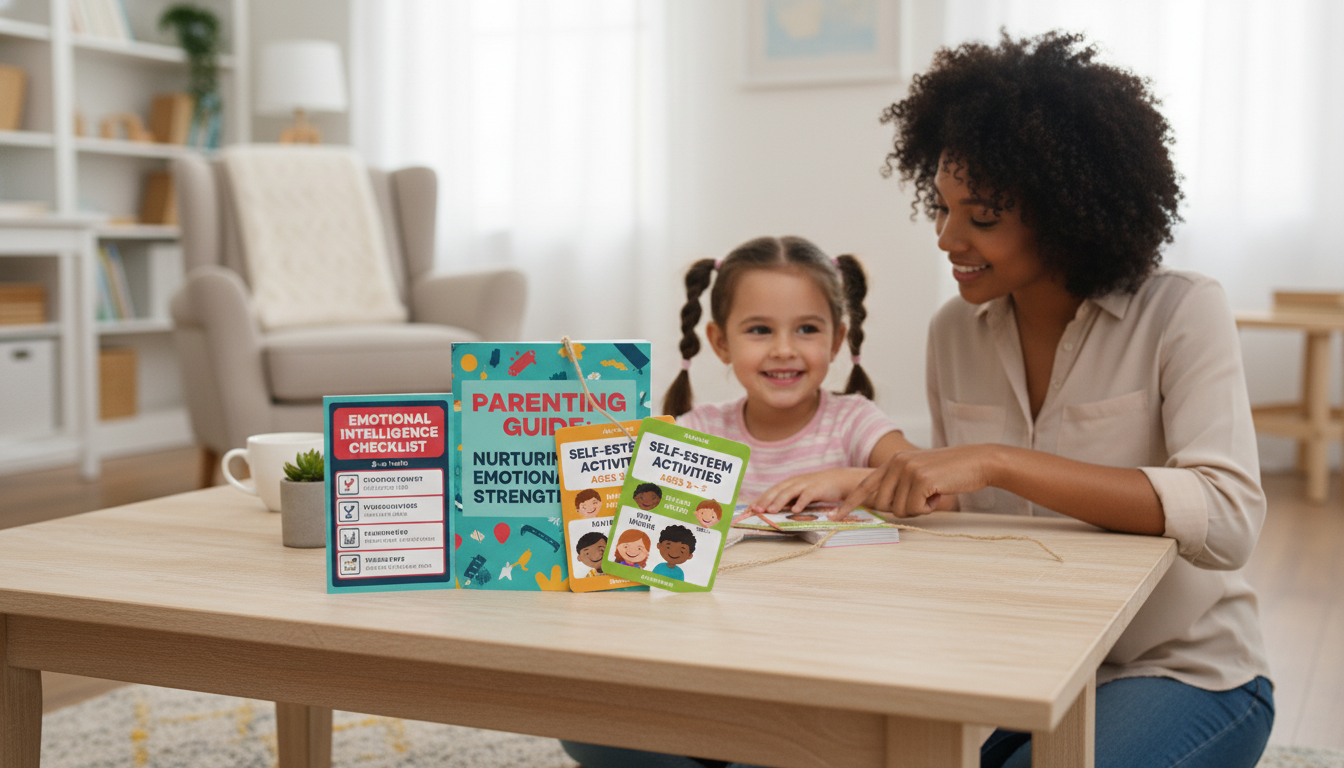
Confident Kids Bundle: Simple Tools for Building Emotional Strength Ages 3–5
Early childhood is full of big feelings, fast-changing moods, and brand-new social challenges. The right routines and activities can help children name emotions, calm their bodies, and practice brave, kind behavior—without turning every moment into a “lesson.” Below are practical, real-life ways to support self-esteem and emotional intelligence at ages 3–5, plus an easy way to keep your approach consistent when life gets busy. For more guidance, see Raising Emotionally Intelligent Children – HelpGuide.org.
What emotional strength looks like at ages 3–5
At this age, “emotional strength” doesn’t mean calm all the time. It looks like small, repeatable skills that show up more often over time. For further reading, see Parenting with Emotional Intelligence • Six Seconds EQ.
- More accurate emotion words (mad, frustrated, worried) instead of only “good/bad.”
- Early self-regulation skills: pausing, taking a breath, asking for help.
- Healthy confidence: trying again after a mistake, tolerating small frustrations.
- Growing empathy: noticing others’ feelings and practicing gentle repair after conflict.
- Realistic expectations: meltdowns still happen; progress shows up in recovery time and communication.
For a helpful overview of typical preschool development, the CDC’s Positive Parenting Tips for preschoolers and the American Academy of Pediatrics guidance on social-emotional development offer grounded expectations.
Common confidence blockers (and what they often mean)
Some behaviors look like “attitude,” but are often clues that a child needs more predictability, clearer language, or a simpler next step.
- Clinginess at drop-off: a need for predictability, connection, and a clear goodbye routine.
- Perfectionism (“I can’t do it!”): fear of getting it wrong; benefits from small steps and specific praise.
- Aggressive or bossy play: difficulty communicating needs; teach scripts for turn-taking and boundaries.
- Frequent whining: overwhelmed communication; reduce choices and offer simple feeling labels.
- Shutting down after correction: sensitivity to tone; use calm, short feedback plus a path to repair.
A gentle, repeatable framework: Connect → Name → Guide
When emotions spike, long explanations usually backfire. A short framework helps you stay consistent—even when you’re tired.
- Connect: get low, soften your voice, offer physical reassurance if welcomed (hand squeeze, side hug).
- Name: label the feeling and the need (“You’re disappointed—you wanted more time.”).
- Guide: offer one doable next step (“Two breaths, then choose: one more turn or help clean up.”).
- Keep it short during big emotions; teach more skills when calm.
- Repeat the same phrases so children can borrow the language when stressed.
Over time, kids start using the script themselves: “I’m mad. I need help.” That’s emotional strength in motion.
What’s inside the Confident Kids Bundle (3-in-1) and how each piece helps
If you’re craving fewer “What should I do right now?” moments, a structured set of tools can reduce decision fatigue and make your routines easier to repeat. The Confident Kids Bundle: Nurturing Emotional Strength (3-in-1) is designed for ages 3–5 with three coordinated resources:
- Parenting guide: practical strategies for confidence-building language, routines, and boundaries.
- Self-esteem activities (ages 3–5): hands-on prompts that practice bravery, persistence, and positive self-talk through play.
- Emotional intelligence checklist: a quick way to track skills (naming feelings, calming, empathy, problem-solving) and notice growth over time.
- Designed to reduce decision fatigue: fewer “What should we do today?” moments and more consistent practice.
- Helpful for transitions: home, preschool prep, new sibling, new classroom, or travel.
Quick guide: Match the moment to a tool
| Situation | What to say | What to do next | Bundle tool to use |
|---|---|---|---|
| Morning resistance | “It’s hard to start. We’ll do this together.” | Offer a 2-step routine and one choice | Parenting guide |
| Big feelings after a limit | “You’re mad. It’s okay to be mad.” | Calm body skill + brief repair | Emotional intelligence checklist |
| Fear of trying | “Trying is brave. Let’s do one tiny step.” | Micro-goal + celebrate effort | Self-esteem activities |
| Sibling conflict | “Both of you want a turn.” | Teach a script: “Can I have a turn when you’re done?” | Parenting guide + checklist |
| End-of-day meltdown | “Your body is tired.” | Snack/water, quiet corner, early bedtime routine | Checklist (patterns) + guide (routines) |
If your main goal is warmer connection and smoother cooperation as a family, pairing the bundle with simple together-time ideas can help. The Stronger Together: Family Bonding Pack adds low-prep activities that build closeness—often the fastest path to better listening and fewer power struggles.
Self-esteem activities that work well for ages 3–5 (without pressure)
Confidence grows through “I can try” experiences—not lectures. Keep sessions short, playful, and easy to repeat.
Daily routines that quietly build emotional intelligence
Using an emotional intelligence checklist without turning kids into a score
When extra support may be helpful
FAQ
Is this bundle suitable for a 3-year-old and a 5-year-old in the same household?
Yes—use the same routines and phrases for both kids, then scale the activity prompts. For a 3-year-old, keep language simple and sessions short; for a 5-year-old, add a bit more responsibility (like choosing a calm-down tool or helping “repair” after conflict).
How much time should self-esteem and emotional skills practice take each day?
Aim for small, consistent moments—often 5–15 minutes—plus quick “in-the-moment” coaching when real life happens. Daily routines and repeated phrases usually matter more than long sit-down activities.
What if my child refuses to talk about feelings?
Start with calming the body and model emotion words without pushing for a response. Use play-based options (stories, drawing, charades) and offer choices like “Do you want a hug or space?” so your child can participate without pressure.











Leave a comment