Zero-Waste Travel Checklist: Easy Eco Packing Kit
Eco-Friendly Traveler Checklist: A Zero-Waste Packing Plan That’s Easy to Follow
Sustainable travel gets much simpler with a repeatable routine: pack fewer disposables, choose reusables that earn their space, and plan low-waste habits before leaving home. This guide lays out a practical eco-friendly traveler checklist—plus a digital option—to help reduce trash, save time, and stay comfortable on the road.
What “eco-friendly packing” actually changes
- Swaps single-use items (mini toiletries, plastic bags, bottled water) for durable reusables that work across trips.
- Builds a compact “travel kit” that stays packed, so last-minute purchases and forgotten essentials happen less often.
- Emphasizes refill, repair, and multipurpose items: fewer duplicates, fewer “just in case” extras.
- Adds a short pre-trip plan (laundry, refill stations, transit choices) so sustainability isn’t left to chance.
For a helpful baseline on the “reduce first” mindset, the U.S. EPA’s guidance is a solid reference: Reduce, Reuse, Recycle.
The core zero-waste travel kit (pack once, use for years)
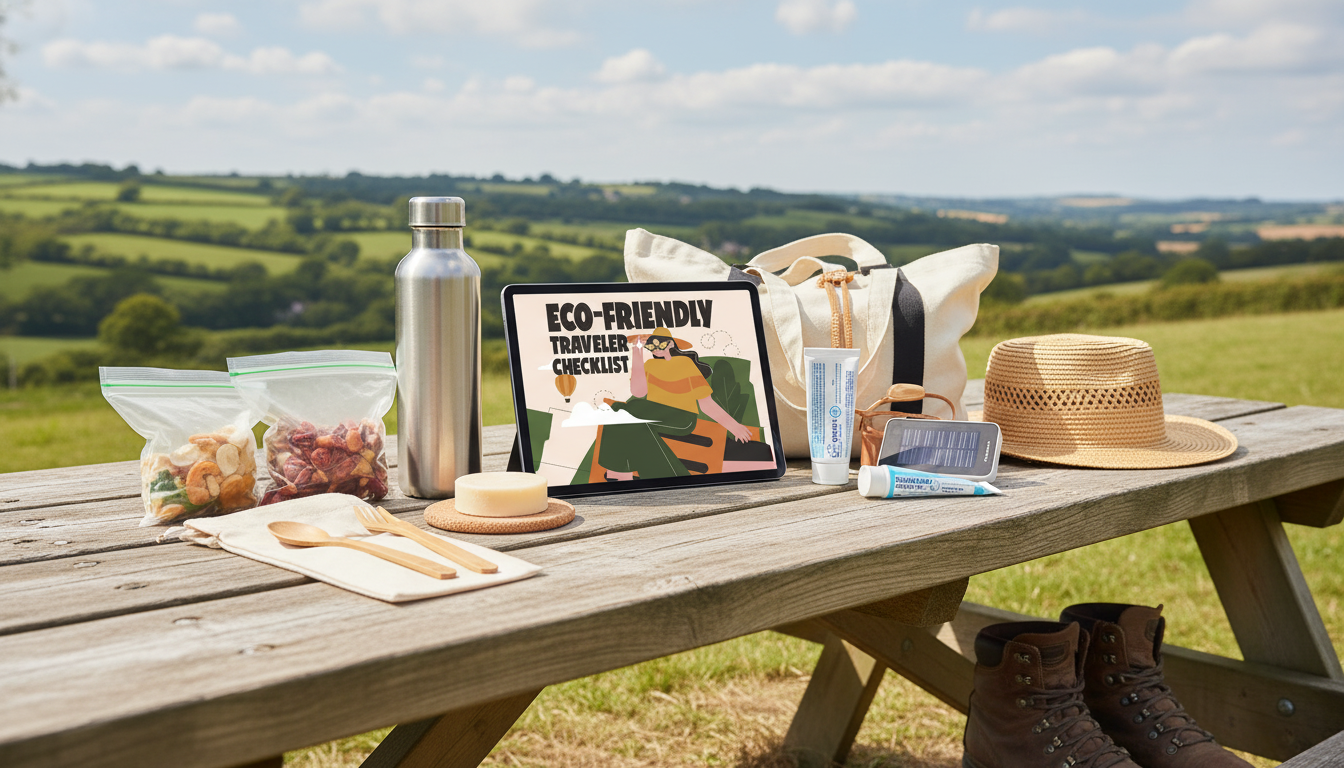
- Water + drinkware: refillable bottle; collapsible cup if space is tight; consider a filter bottle for uncertain tap quality.
- Food on the go: lightweight container, reusable cutlery, straw (optional), and a cloth napkin to avoid takeaway waste.
- Bags: one foldable tote for groceries and a small pouch for loose items; skip disposable produce bags when possible.
- Toiletries: solid shampoo/conditioner bars, refillable bottles, safety razor or durable razor handle, bamboo toothbrush or replaceable-head brush.
- Laundry: travel soap sheets or small bar, sink stopper (optional), and a quick-dry towel to reduce paper towel use.
- Cleanup: a small bar of soap in a tin or a concentrated multipurpose soap; avoid packing bulky cleaners.
Reusable swaps that make the biggest difference
| Travel need | Common disposable | Low-waste alternative | Pack tip |
|---|---|---|---|
| Hydration | Plastic water bottles | Refillable bottle (and/or filter) | Clip to bag; refill after security |
| Snacks/meals | Takeaway containers + plastic cutlery | Container + spork | Choose nesting, leak-resistant pieces |
| Shopping | Plastic bags | Foldable tote | Keep one in daypack at all times |
| Toiletries | Mini bottles and sample packets | Solids + refillables | Use a small tin and label bottles |
| Shaving | Disposable razors | Safety razor or durable handle | Pack blades in a safe case |
| Laundry | Single-use detergent packets | Soap sheets or small bar | Cut bar into smaller pieces for short trips |
Toiletries and personal care: low-waste, leak-proof, flight-friendly
- Prioritize solids: shampoo bars, conditioner bars, and solid soaps reduce liquid limits, leaks, and plastic minis; store in ventilated tins or soap bags so they can dry.
- Refillables for must-have liquids: use sturdy bottles with tight caps; keep labels clear to avoid mix-ups (especially with similar-looking products).
- Sun and bug protection: choose reef-safer sunscreen where applicable and pack only what you’ll actually use to prevent half-used bottles from being tossed.
- Menstrual care: consider a cup, disc, or period underwear depending on comfort and access to washing.
- Medical basics: bring prescriptions, a few blister bandages, and a compact first-aid set—skip bulky duplicates you can’t realistically use up.
Many destinations are actively promoting lower-impact visitor practices; for a broader overview, see UN Environment Programme – Sustainable Tourism.
Clothing packing rules that cut emissions and baggage weight
- Build a capsule wardrobe: pick a limited color palette and pieces that mix easily, so every top works with every bottom.
- Choose re-wearable fabrics: merino, linen, and quick-dry blends can reduce laundry frequency and help you pack fewer total items.
- Pack for layers: one insulating layer plus one shell often replaces several bulky, single-purpose pieces.
- Plan to do laundry: a simple sink-wash routine makes a smaller suitcase realistic—even for longer trips.
- Repair-ready: add a tiny sewing kit or patch tape so a loose button or small tear doesn’t force a replacement purchase.
On-the-road habits that prevent trash (without feeling strict)
- Refill first: identify refill stations, hotel water dispensers, or safe tap sources; keep your bottle visible and easy to grab.
- Decline extras: napkins, plastic cutlery, sachets, and freebies—accept only what you’ll use.
- Eat with a plan: sit-down meals and markets often mean less packaging than quick takeaway.
- Sort waste when possible: learn local recycling/compost rules; when unclear, focus on reducing waste upstream.
- Leave no trace: pack out litter on hikes, stay on paths, and avoid disturbing wildlife or taking natural souvenirs.
Sustainable transport and lodging choices that complement your packing
For an overview of how tourism ties into sustainability goals worldwide, see UNWTO – Sustainable Development.
A digital checklist that makes repeat trips easier
Downloadable checklist option
If you want a ready-to-use template, the Eco-Friendly Traveler Checklist (digital download) is designed to keep your low-waste essentials and pre-trip reminders in one place, with space for destination-specific notes.
- The Ultimate Productivity Blueprint | Digital Productivity Guide for Goal Setting, Time Management & Daily Routines
- Stronger Together: Family Bonding Pack | Digital Family Activities Guide for Kids & Parents
FAQ
What are the top three items that reduce the most travel waste?
A refillable water bottle cuts repeated bottled-water purchases, a small food container plus reusable cutlery replaces most takeaway packaging, and solid/refillable toiletries prevent a steady stream of plastic minis and single-use packets.
How can toiletries be packed sustainably without leaks?
Use solid products first, then pack any liquids in refillable bottles with tight caps inside a small zip pouch; label everything clearly and let bars dry in ventilated tins or soap bags. For flights, keeping liquids minimal also makes security rules easier to manage.
Is zero-waste travel realistic for flights and hotels?
It’s realistic to aim for meaningful reduction rather than perfection: bring a few high-impact reusables, decline extras, refill water, and reuse linens when comfortable. When you can, choose lower-impact transport and lodging practices that support waste reduction.










Leave a comment